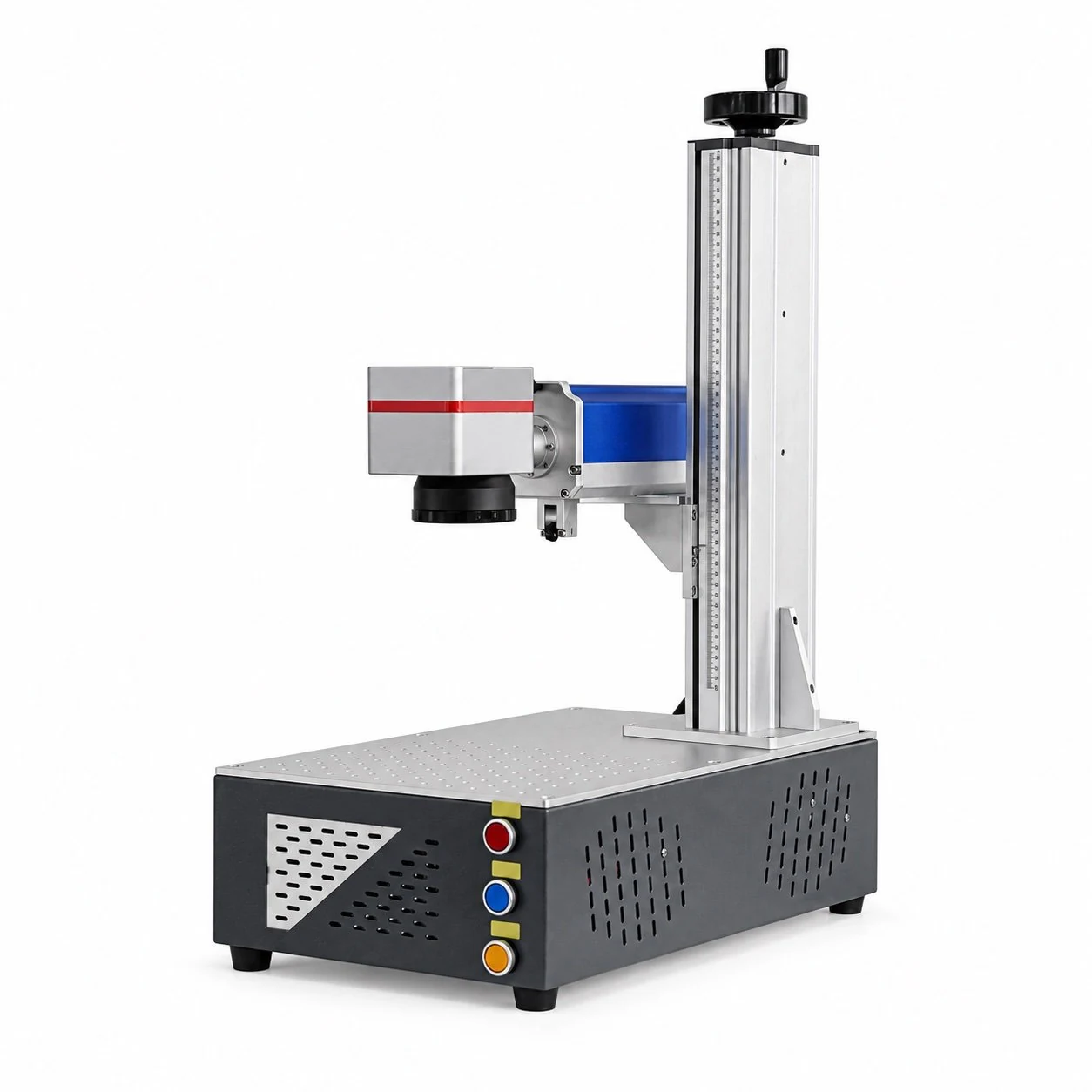
FY-LMM02
FY-LMM02 Desktop Laser Marking & Engraving Machine
Match the equipment to the material, part and production workflow.
View product ↗FYXFER MOPA laser marking machines provide broader pulse control for applications where appearance and heat input need careful adjustment. They can be evaluated for color effects on stainless steel, dark marks on anodized aluminum and improved contrast on selected plastics. Because every alloy, coating and formulation responds differently, the required result must be confirmed on representative samples.
Material.
Result.
Configuration.
Match the equipment to the material, part and production workflow.
Match the equipment to the material, part and production workflow.
View product ↗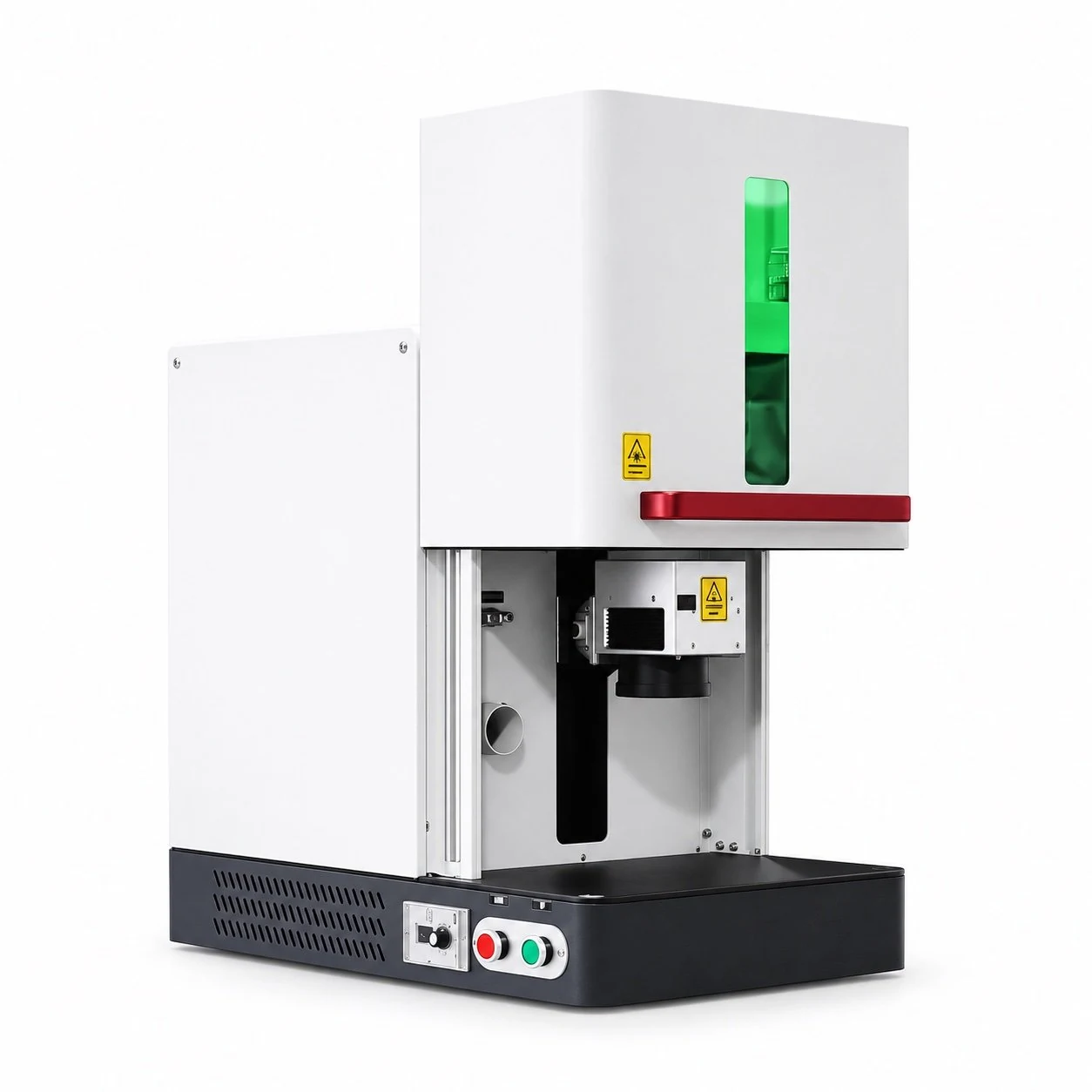
Match the equipment to the material, part and production workflow.
View product ↗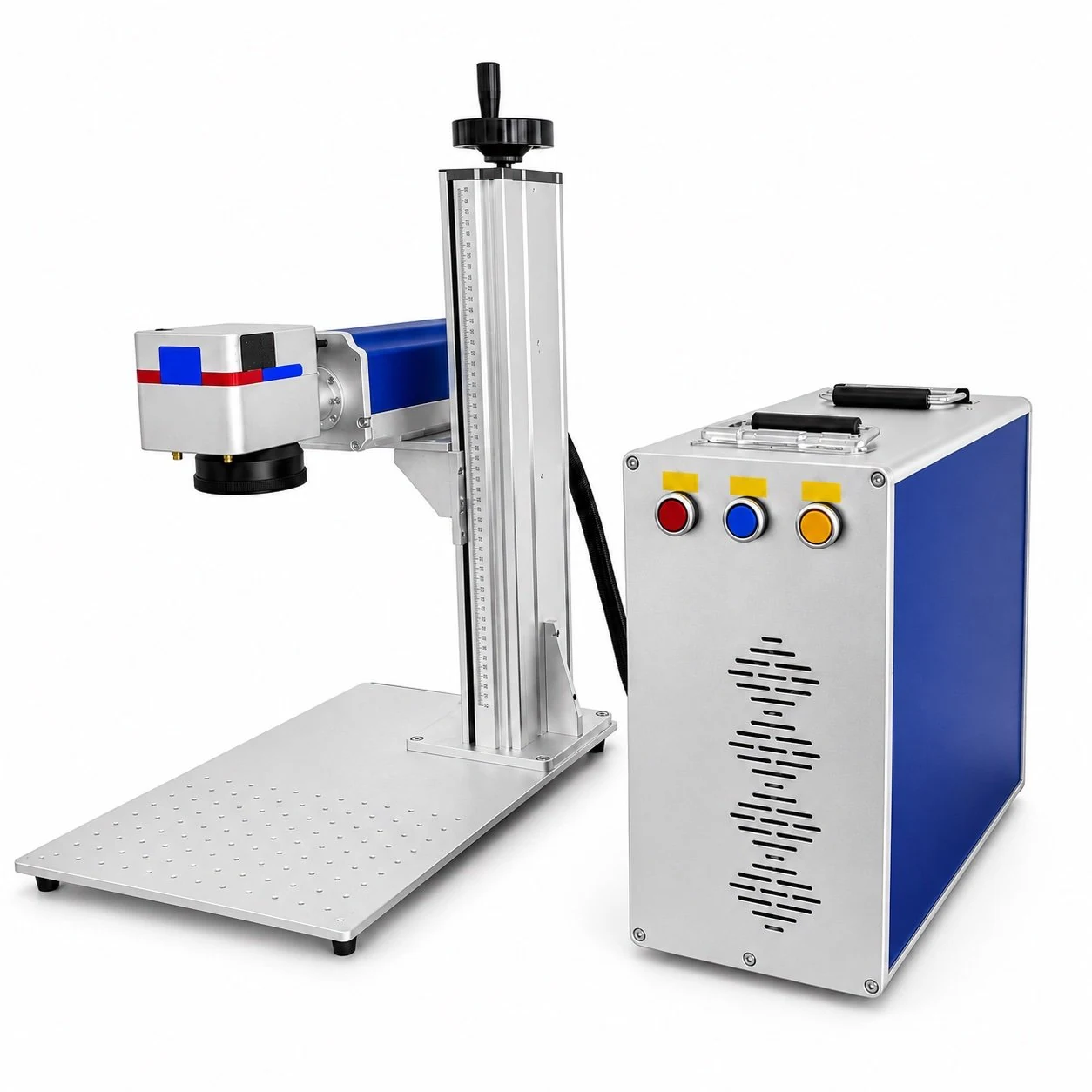
Match the equipment to the material, part and production workflow.
View product ↗Match the equipment to the material, part and production workflow.
Explore more examples on our laser marking applications page.
Explore more examples on our laser marking applications page.
Controlled interaction with a suitable stainless-steel surface can produce visible color effects. Available shades and repeatability depend on alloy, finish, preparation, focal position and processing parameters.
MOPA technology can create dark, high-contrast logos, serial numbers and codes on selected anodized aluminum parts. Anodizing type, coating thickness, dye and supplier variation can change the result.
Adjustable pulse behavior may help manage excessive melting, bubbling or edge distortion while developing contrast on compatible plastics. Resin, pigment, fillers and additives must be tested.
Confirm the selected equipment, fixtures, utilities, installation needs and supply scope before ordering.
Consider MOPA when the application requires more process flexibility than routine metal identification. Typical reasons include developing stainless-steel color effects, seeking a dark mark on anodized aluminum, controlling heat on thin components or finding a better contrast window on a compatible plastic.
Consider MOPA when the application requires more process flexibility than routine metal identification. Typical reasons include developing stainless-steel color effects, seeking a dark mark on anodized aluminum, controlling heat on thin components or finding a better contrast window on a compatible plastic.
For straightforward logos, serial numbers and engraving on common metals, a conventional fiber laser marking machine may be the simpler starting point. For wood, leather, paper and acrylic, compare CO2 laser marking machines . For fine, low-heat marking, review UV laser marking machines .
Important: MOPA does not guarantee a specific color, shade or degree of blackness on every part. Stable production requires representative samples, an approved visual standard and controlled material conditions.
Confirm the selected equipment, fixtures, utilities, installation needs and supply scope before ordering.
A MOPA marking laser is itself a type of fiber laser. In machine selection, “MOPA vs fiber” usually means comparing an adjustable-pulse MOPA source with a conventional fiber marking source. The useful question is which source can produce the required mark on your material at an acceptable production cycle.
A MOPA marking laser is itself a type of fiber laser. In machine selection, “MOPA vs fiber” usually means comparing an adjustable-pulse MOPA source with a conventional fiber marking source. The useful question is which source can produce the required mark on your material at an acceptable production cycle.
For a dark mark on stainless steel, use the stainless-steel black-marking comparison to define material condition, appearance, heat effects and complete cycle time before approving a source.
For variable codes, use our laser serial number marking guide to define numbering rules and verification. Then compare the FY-LMM01 floor-standing and FY-LMM02 desktop machine formats; confirm MOPA source compatibility, enclosure and fixtures for the selected configuration.
A MOPA source offers pulse settings that can help tune the interaction with the surface. The available pulse-width and frequency ranges depend on the source model and must be confirmed in the quotation.
For routine metal identification, start by testing a conventional fiber source. Compare MOPA when the sample needs tighter control of color, dark contrast or heat effects. Evaluate both on the same alloy, coating and finish.
Compare mark quality, readability, complete cycle time and repeatability across representative parts. More pulse settings do not by themselves guarantee a faster process or a better result for every material.
Confirm the selected equipment, fixtures, utilities, installation needs and supply scope before ordering.
Explore more examples on our laser marking applications page.
Controlled interaction with a suitable stainless-steel surface can produce visible color effects. Available shades and repeatability depend on alloy, finish, preparation, focal position and processing parameters.
MOPA technology can create dark, high-contrast logos, serial numbers and codes on selected anodized aluminum parts. Anodizing type, coating thickness, dye and supplier variation can change the result.
Adjustable pulse behavior may help manage excessive melting, bubbling or edge distortion while developing contrast on compatible plastics. Resin, pigment, fillers and additives must be tested.
Consider MOPA when the application requires more process flexibility than routine metal identification. Typical reasons include developing stainless-steel color effects, seeking a dark mark on anodized aluminum, controlling heat on thin components or finding a better contrast window on a compatible plastic.
For straightforward logos, serial numbers and engraving on common metals, a conventional fiber laser marking machine may be the simpler starting point. For wood, leather, paper and acrylic, compare CO2 laser marking machines . For fine, low-heat marking, review UV laser marking machines .
Important: MOPA does not guarantee a specific color, shade or degree of blackness on every part. Stable production requires representative samples, an approved visual standard and controlled material conditions.
A MOPA marking laser is itself a type of fiber laser. In machine selection, “MOPA vs fiber” usually means comparing an adjustable-pulse MOPA source with a conventional fiber marking source. The useful question is which source can produce the required mark on your material at an acceptable production cycle.
For a dark mark on stainless steel, use the stainless-steel black-marking comparison to define material condition, appearance, heat effects and complete cycle time before approving a source.
For variable codes, use our laser serial number marking guide to define numbering rules and verification. Then compare the FY-LMM01 floor-standing and FY-LMM02 desktop machine formats; confirm MOPA source compatibility, enclosure and fixtures for the selected configuration.
A MOPA source offers pulse settings that can help tune the interaction with the surface. The available pulse-width and frequency ranges depend on the source model and must be confirmed in the quotation.
For routine metal identification, start by testing a conventional fiber source. Compare MOPA when the sample needs tighter control of color, dark contrast or heat effects. Evaluate both on the same alloy, coating and finish.
Compare mark quality, readability, complete cycle time and repeatability across representative parts. More pulse settings do not by themselves guarantee a faster process or a better result for every material.
Explore more examples on our laser marking applications page.
Controlled interaction with a suitable stainless-steel surface can produce visible color effects. Available shades and repeatability depend on alloy, finish, preparation, focal position and processing parameters.
MOPA technology can create dark, high-contrast logos, serial numbers and codes on selected anodized aluminum parts. Anodizing type, coating thickness, dye and supplier variation can change the result.
Adjustable pulse behavior may help manage excessive melting, bubbling or edge distortion while developing contrast on compatible plastics. Resin, pigment, fillers and additives must be tested.
Consider MOPA when the application requires more process flexibility than routine metal identification. Typical reasons include developing stainless-steel color effects, seeking a dark mark on anodized aluminum, controlling heat on thin components or finding a better contrast window on a compatible plastic.
For straightforward logos, serial numbers and engraving on common metals, a conventional fiber laser marking machine may be the simpler starting point. For wood, leather, paper and acrylic, compare CO2 laser marking machines . For fine, low-heat marking, review UV laser marking machines .
Important: MOPA does not guarantee a specific color, shade or degree of blackness on every part. Stable production requires representative samples, an approved visual standard and controlled material conditions.
A MOPA marking laser is itself a type of fiber laser. In machine selection, “MOPA vs fiber” usually means comparing an adjustable-pulse MOPA source with a conventional fiber marking source. The useful question is which source can produce the required mark on your material at an acceptable production cycle.
For a dark mark on stainless steel, use the stainless-steel black-marking comparison to define material condition, appearance, heat effects and complete cycle time before approving a source.
For variable codes, use our laser serial number marking guide to define numbering rules and verification. Then compare the FY-LMM01 floor-standing and FY-LMM02 desktop machine formats; confirm MOPA source compatibility, enclosure and fixtures for the selected configuration.
A MOPA source offers pulse settings that can help tune the interaction with the surface. The available pulse-width and frequency ranges depend on the source model and must be confirmed in the quotation.
For routine metal identification, start by testing a conventional fiber source. Compare MOPA when the sample needs tighter control of color, dark contrast or heat effects. Evaluate both on the same alloy, coating and finish.
Compare mark quality, readability, complete cycle time and repeatability across representative parts. More pulse settings do not by themselves guarantee a faster process or a better result for every material.
The final proposal should define the MOPA source, power, pulse-control range, lens, marking field, workstation format, focusing method, fixture, rotary device, extraction requirements and software functions. These details should be selected after the real component and acceptance target are reviewed.
Marking field and feature size are related. Curved, recessed or irregular parts can require dedicated fixtures or rotary handling. Cycle time also depends on artwork, filled area, required contrast and material response, so it should be evaluated with the actual file.
No. Possible colors vary with grade, finish, preparation and process conditions. Requested shades should be approved through testing.
No. Anodizing chemistry, thickness, color and batch variation affect darkness and uniformity.
It can suit selected plastics where contrast or heat control is important. Visually similar plastics can react differently, so the exact formulation must be tested.
Tell FYXFER what you need to mark and how the approved result should look.
Fiber laser marking machine for metal · Fiber vs MOPA · 20W vs 30W vs 50W · Stainless-steel marking
Compare fiber laser cutting formats for sheet metal and industrial fabrication.
No. Possible colors vary with grade, finish, preparation and process conditions. Requested shades should be approved through testing.
No. Anodizing chemistry, thickness, color and batch variation affect darkness and uniformity.
It can suit selected plastics where contrast or heat control is important. Visually similar plastics can react differently, so the exact formulation must be tested.
Start with your material and application. Add the dimensions, result and production target when known.
Continue on our contact page to share your application and request a configuration.
Discuss my application ↗